

In modern electrical and industrial systems, ensuring safe and efficient cable management is crucial. One of the most essential components used for this purpose is the brass cable gland. Known for their durability, corrosion resistance, and high performance, brass cable glands are widely used across industries such as electrical, construction, oil & gas, and telecommunications.
This blog explores everything you need to know about brass cable glands, including their features, types, applications, and benefits.
What Are Brass Cable Glands?
Brass cable glands are mechanical devices used to securely attach and seal the ends of electrical cables to equipment. They provide protection against dust, moisture, and environmental damage while ensuring proper grounding and strain relief.
Manufactured using high-quality brass, these glands are designed to withstand harsh industrial conditions and offer long-lasting performance.
Key Features of Brass Cable Glands
- 1. High Durability: Brass is a strong and long-lasting material, making these cable glands ideal for heavy-duty applications.
- 2. Corrosion Resistance: Brass cable glands are resistant to rust and corrosion, especially when nickel-plated, making them suitable for outdoor and marine environments.
- 3. Excellent Conductivity: Brass offers good electrical conductivity, ensuring efficient grounding and safety.
- 4. Temperature Resistance: They can operate effectively under extreme temperature conditions without losing performance.
- 5. Leak-Proof Sealing: Provides strong sealing against dust, water, and other contaminants, ensuring IP-rated protection.
Types of Brass Cable Glands
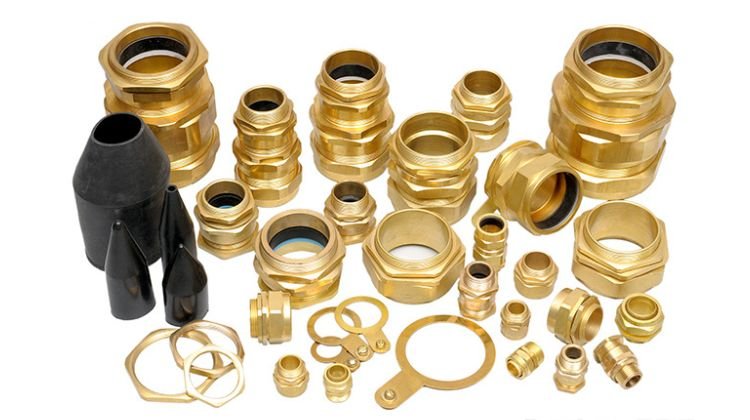
1. Single Compression Cable Glands
Used in light-duty applications where mechanical stress is minimal. Commonly used in indoor environments.
2. Double Compression Cable Glands
Designed for heavy-duty applications, offering better sealing and protection. Widely used in hazardous and outdoor environments.
3. Weatherproof Cable Glands
Specifically designed to protect against environmental factors like rain, dust, and humidity.
4. Explosion-Proof Cable Glands
Used in hazardous areas such as oil refineries and chemical plants to prevent sparks or explosions.
Applications of Brass Cable Glands
Brass cable glands are used across multiple industries, including:
- Electrical and Power Distribution
- Oil & Gas Industry
- Marine and Shipbuilding
- Telecommunications
- Construction and Infrastructure
- Automation and Control Systems
Their versatility makes them a preferred choice for both indoor and outdoor installations.
Choosing the Right Brass Cable Gland
When selecting a brass cable gland, consider the following factors:
- Cable size and type
- Environmental conditions
- IP rating requirements
- Application (indoor/outdoor/hazardous area)
- Thread type (Metric, PG, NPT, BSP)
Choosing the correct gland ensures optimal performance and safety.
Conclusion
Brass cable glands play a vital role in ensuring safe, efficient, and long-lasting cable management solutions. Their durability, corrosion resistance, and versatility make them an ideal choice for various industrial and commercial applications.
If you are looking for high-quality brass cable glands, partnering with a reliable manufacturer and exporter ensures consistent quality and global standards compliance.